A client recently had a new AI tool turned on before the team had been prepared to use it.
The result? Most of the staff ignored it. Everyone reverted to what they were doing before.
That experience has me thinking about the gap between what an AI tool promises and what it takes to make it work inside a business.

Why are AI tools so appealing to service businesses?
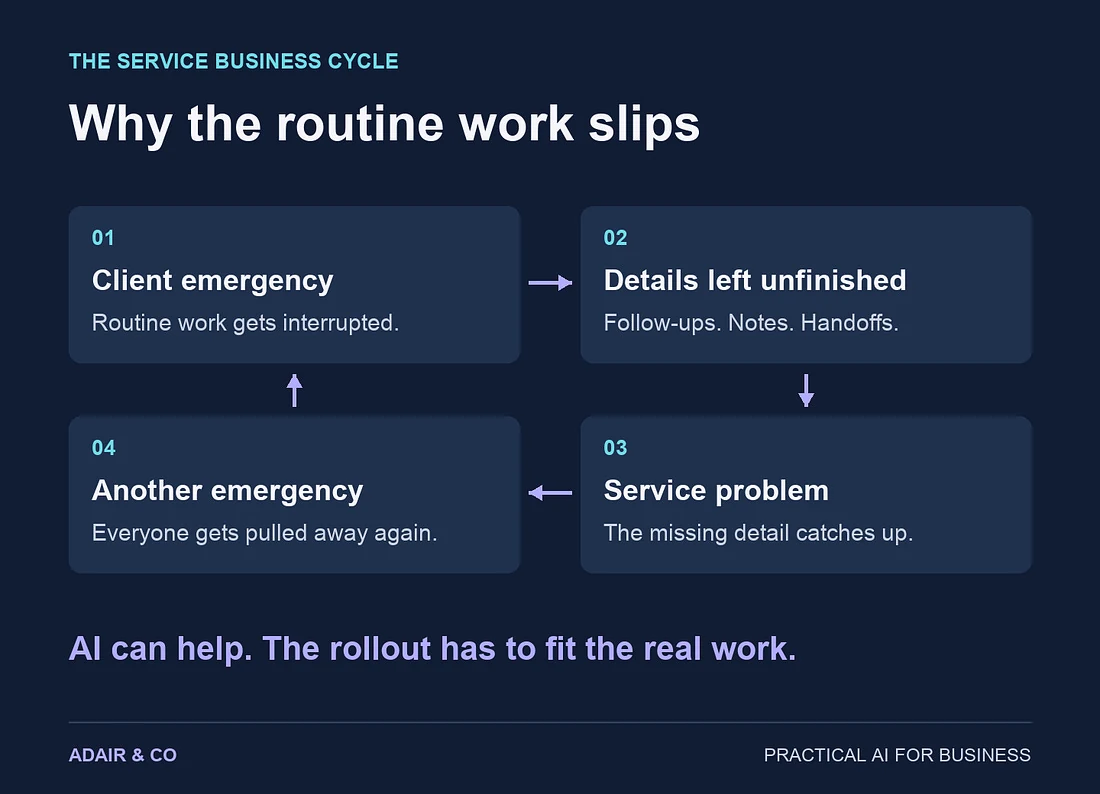
I keep seeing AI tools promising relief from follow-ups, documentation, and handoffs—the routine work that slips when client emergencies take over.
Those unfinished details can become the next emergency, keeping everyone trapped in the same cycle.
Why does an AI rollout have to account for people?
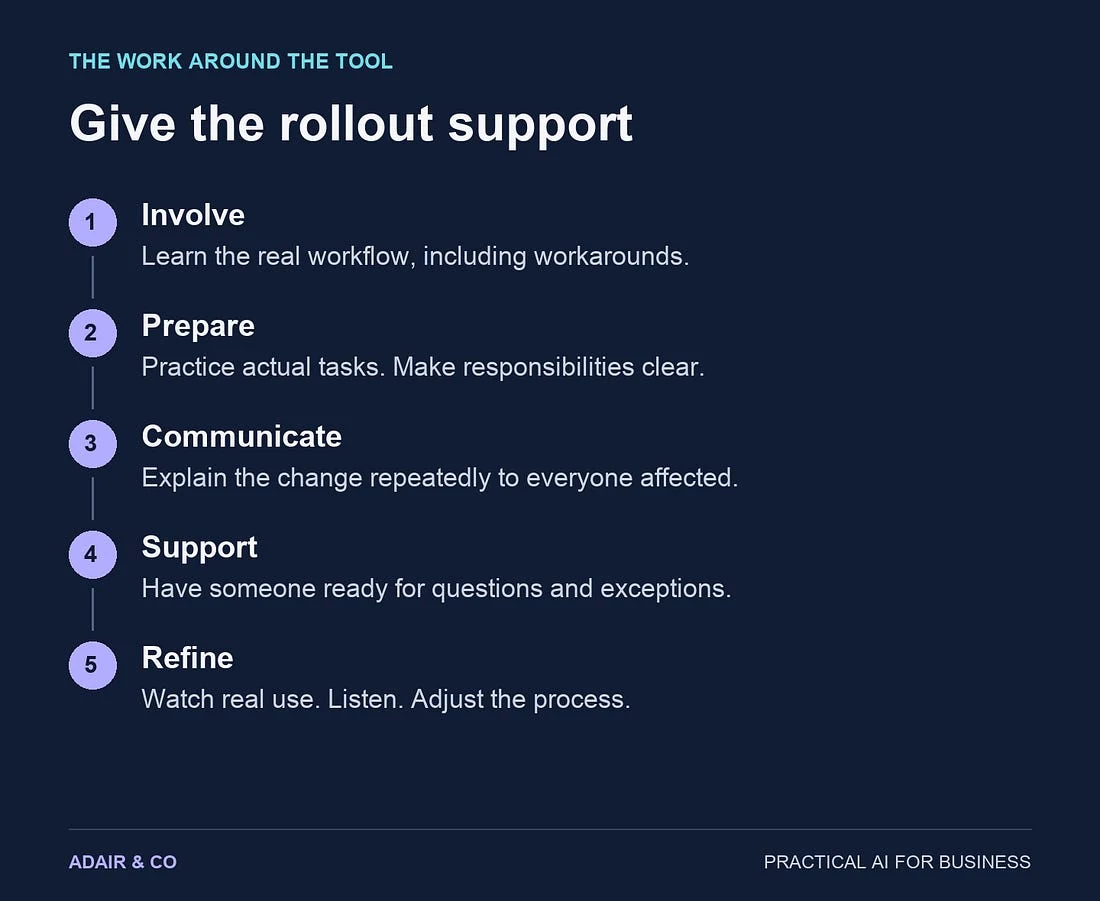
Technical capability is only part of implementation. A busy service team needs a practical way to work with the tool, and someone responsible for helping that happen.
Without preparation and support, returning to a familiar process is a predictable response. In my client’s case, the tool had been turned on. A new way of working hadn’t been established.
What should my business do before turning on an AI tool?
Choose who will lead implementation, and ask for a concrete plan. You have two practical paths.
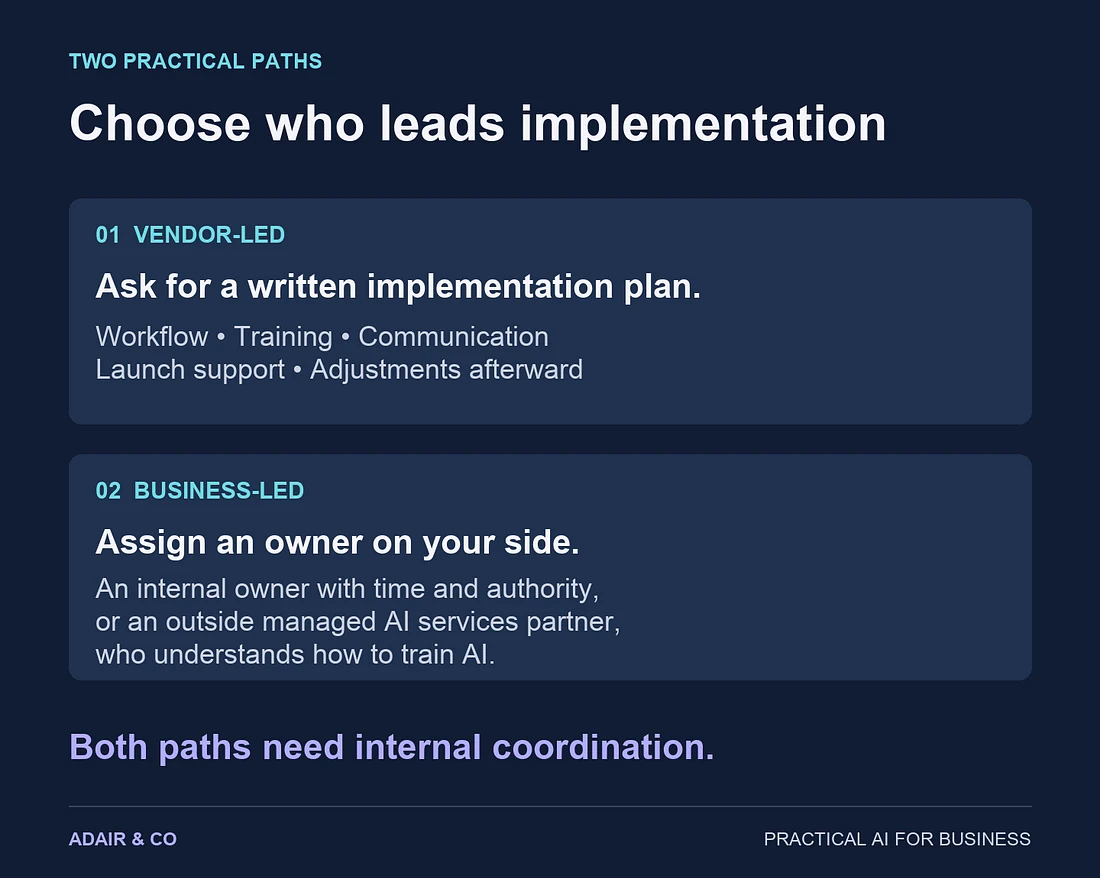
- With the vendor, clarify what they handle and what your business must own. If the plan only covers setup and a demonstration, ask who handles the rest.
- With an internal owner or outside partner, agree on deliverables and where your team needs to participate. Give your internal coordinator time and authority; adding implementation to an already full workload leaves it competing with client emergencies.
What five questions should we answer before go-live?
- Who owns implementation, and what does their plan include?
- Do the people affected know what changes and what’s expected of them?
- Have employees practiced using the tool in their actual work?
- Who helps when something goes wrong or an exception appears?
- How will we check adoption, service results, and what needs adjusting?
What should happen after the launch date?
A launch date tells you when a tool becomes available. Watch what happens afterward: Are people using it? Are the follow-ups happening? Are handoffs improving? Is it helping the team serve clients better?
Before you turn on your next AI tool, make sure someone owns the implementation—and that their plan includes your people.
If your team needs help with that, this is the work we do through Managed AI Services at Adair & Co: putting the solution in place, preparing employees to use it, and staying involved as real-world use reveals what needs adjusting. We can also help get an existing rollout back on track.
The takeaways, in short
- Turning a tool on is not the same as establishing a new way of working
- AI tools promise relief from follow-ups, documentation and handoffs, but the rollout has to fit how the team really works
- Pick who leads implementation, vendor or business, and ask for a concrete written plan that includes your people
- Give an internal coordinator time and authority so the rollout doesn’t compete with client emergencies
- Before go-live, answer five questions: who owns it, who knows what changes, who has practiced, who helps with exceptions, and how adoption will be checked
- After launch, watch usage, follow-ups, handoffs and service results, then adjust
Questions we hear about this.
Why do employees ignore a new AI tool?
Usually because the tool was turned on without preparing or supporting the people who are meant to use it. Without preparation and support, returning to a familiar process is a predictable response. The tool is live, but a new way of working hasn’t been established.
Who should lead an AI implementation?
Choose an owner and ask for a concrete plan. With a vendor, clarify what they handle and what your business must own, and ask who handles the rest if the plan only covers setup and a demonstration. With an internal owner or outside partner, agree on deliverables and where your team needs to participate, and give your internal coordinator time and authority so implementation isn’t competing with client emergencies.
How do we know whether an AI rollout is working?
Look at what happens after the launch date: are people using the tool, are follow-ups happening, are handoffs improving, and is it helping the team serve clients better? Planning how you will check adoption, service results and what needs adjusting should happen before go-live.
Before you turn on your next AI tool, make sure someone owns the implementation—and that their plan includes your people.
Related: You Hired for Capacity. So Why Did Everyone Get Busier? covers the same pattern when headcount is added without the systems to support it.
Adapted from my Practical AI for Business newsletter on Substack.