Yes, the machines are eating the internet. Well, not literally. But you know what I mean.
A month ago, I wrote about the web increasingly having two audiences: humans and machines. I went back and checked the data.
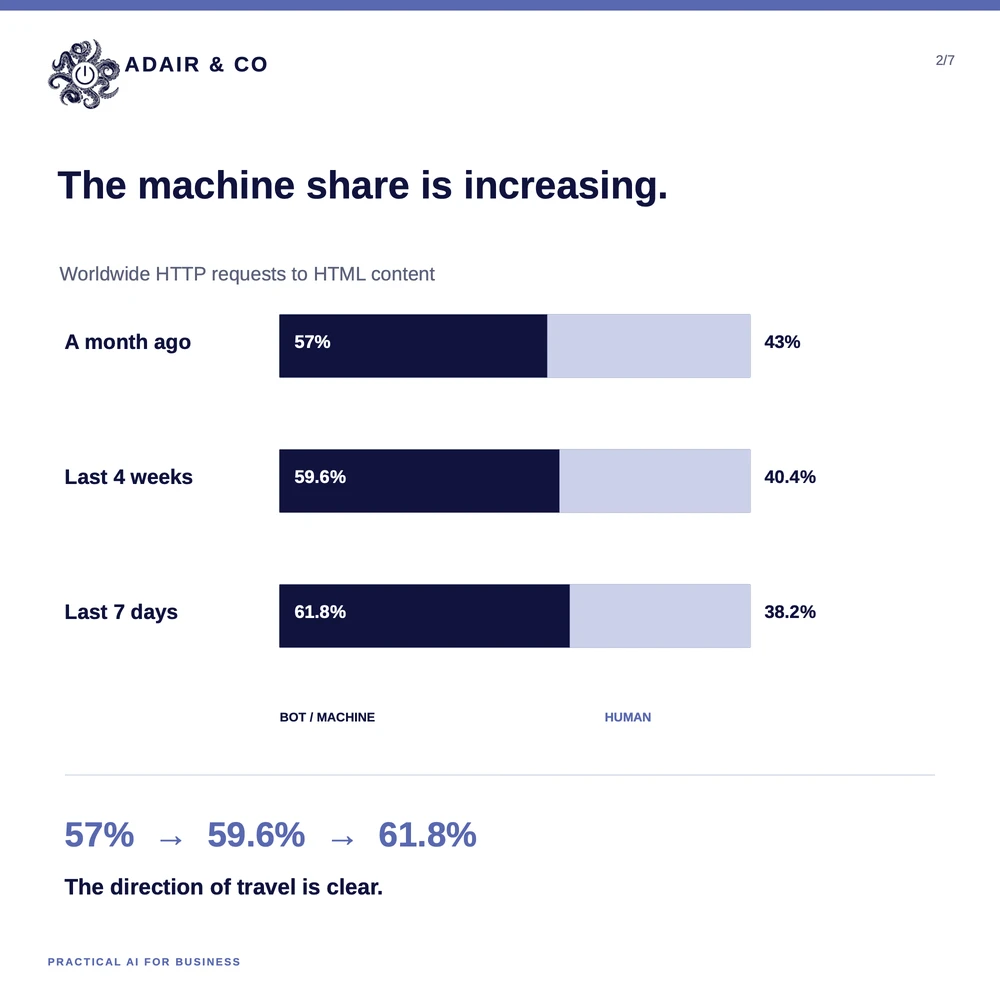
Yes, and the numbers have moved further in the same direction over the past month. Looking at worldwide HTTP requests to HTML content, bot and machine traffic has climbed from 57% a month ago, to 59.6% over the last four weeks, to 61.8% in the last seven days — against 43%, 40.4% and 38.2% human traffic over those same windows.
57% → 59.6% → 61.8%. The direction of travel is clear.
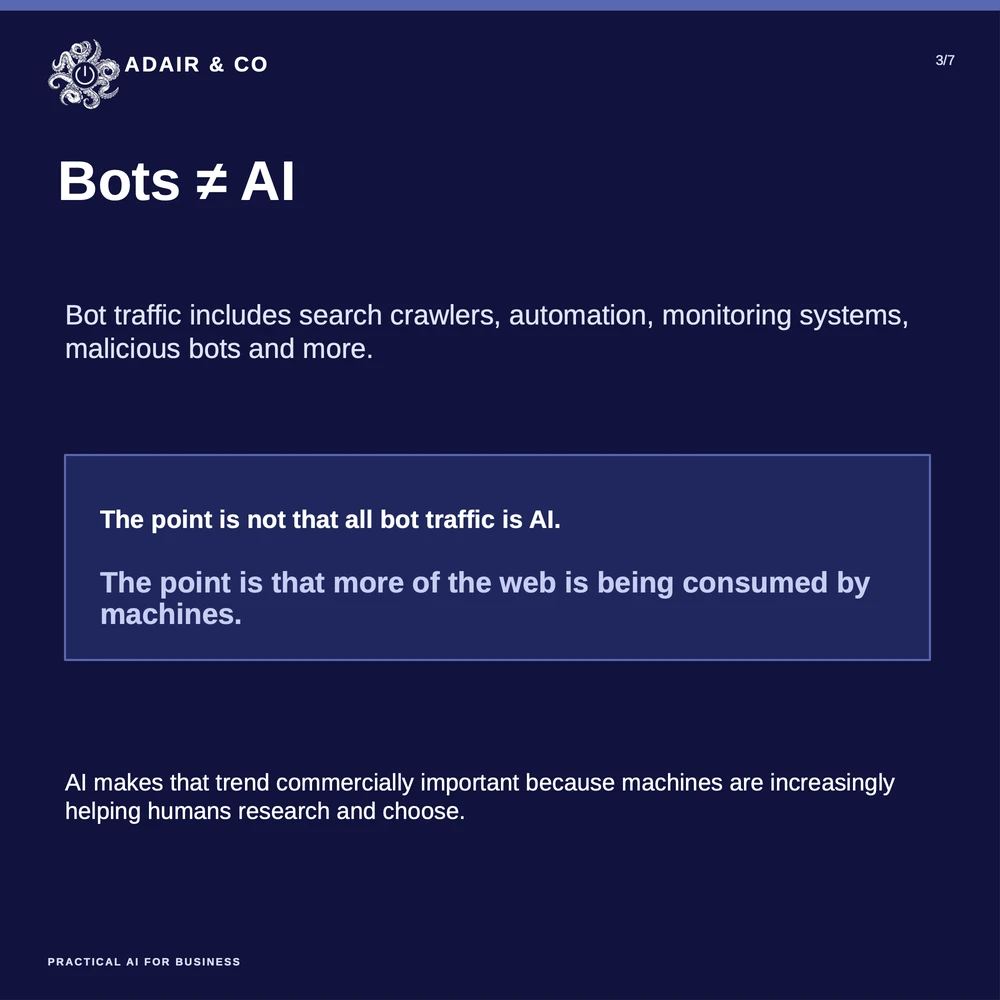
No, and that's an important distinction. Bot traffic includes search crawlers, automation, monitoring systems, malicious bots and more — it always has.
The point isn't that all of that traffic is AI. The point is that more of the web is being consumed by machines generally, and AI is what makes that trend commercially important, because machines are increasingly helping humans research and choose.
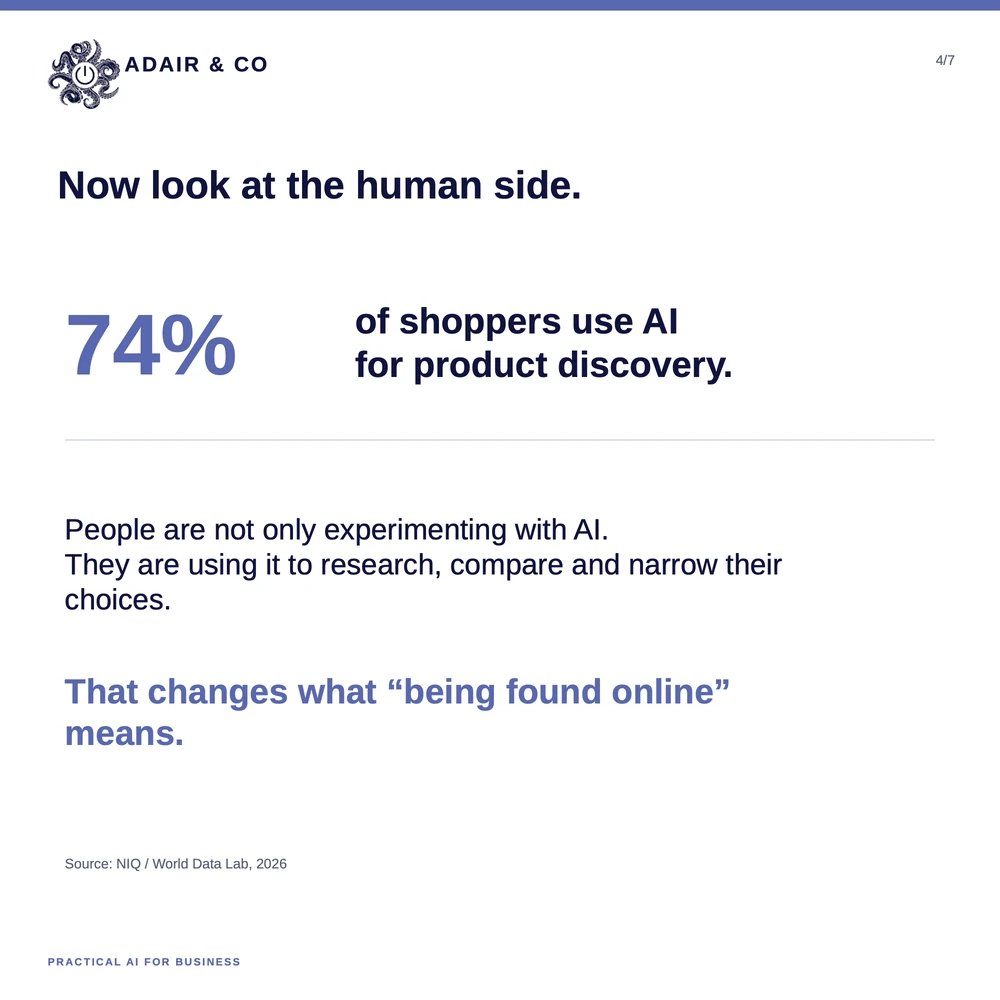
Now look at the human side: 74% of shoppers use AI for product discovery. People aren't only experimenting with AI. They're using it to research, compare and narrow their choices.
That changes what “being found online” means.
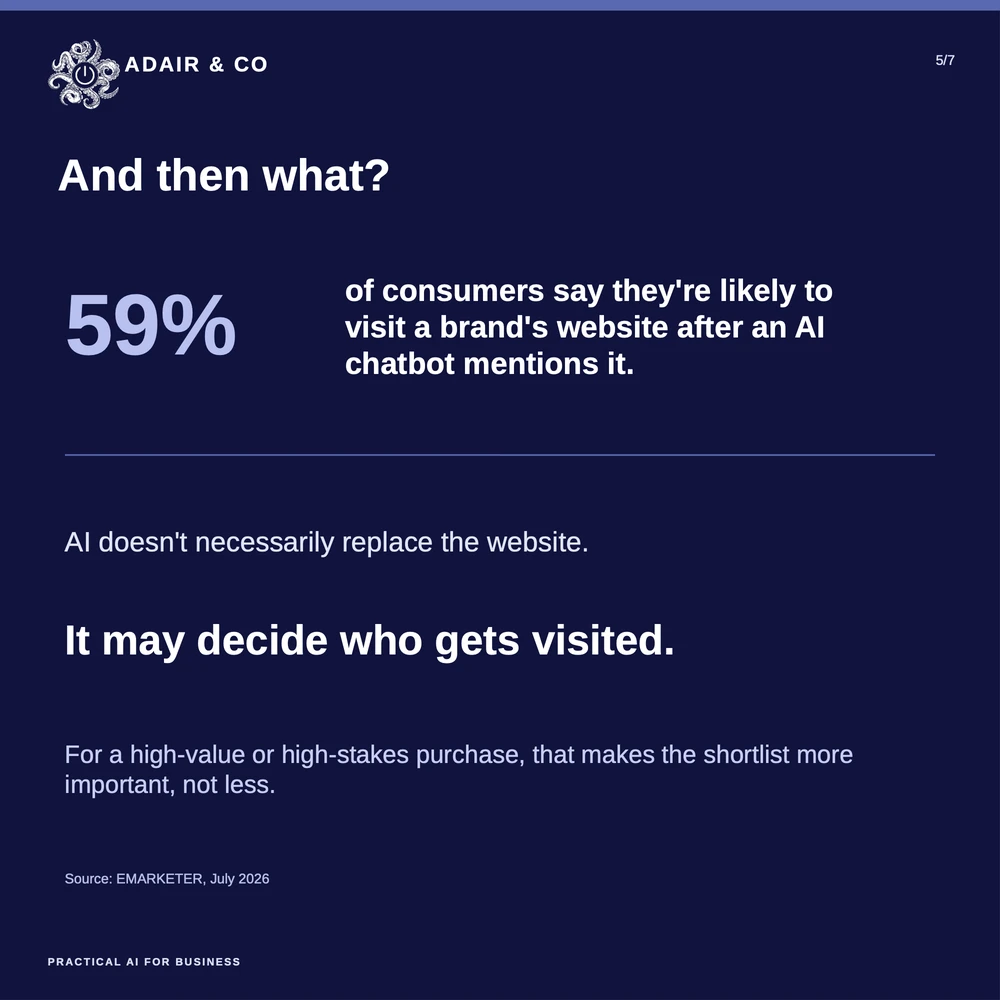
And then what? 59% of consumers say they're likely to visit a brand's website after an AI chatbot mentions it. AI doesn't necessarily replace the website. It may decide who gets visited.
For a high-value or high-stakes purchase, that makes the shortlist more important, not less.
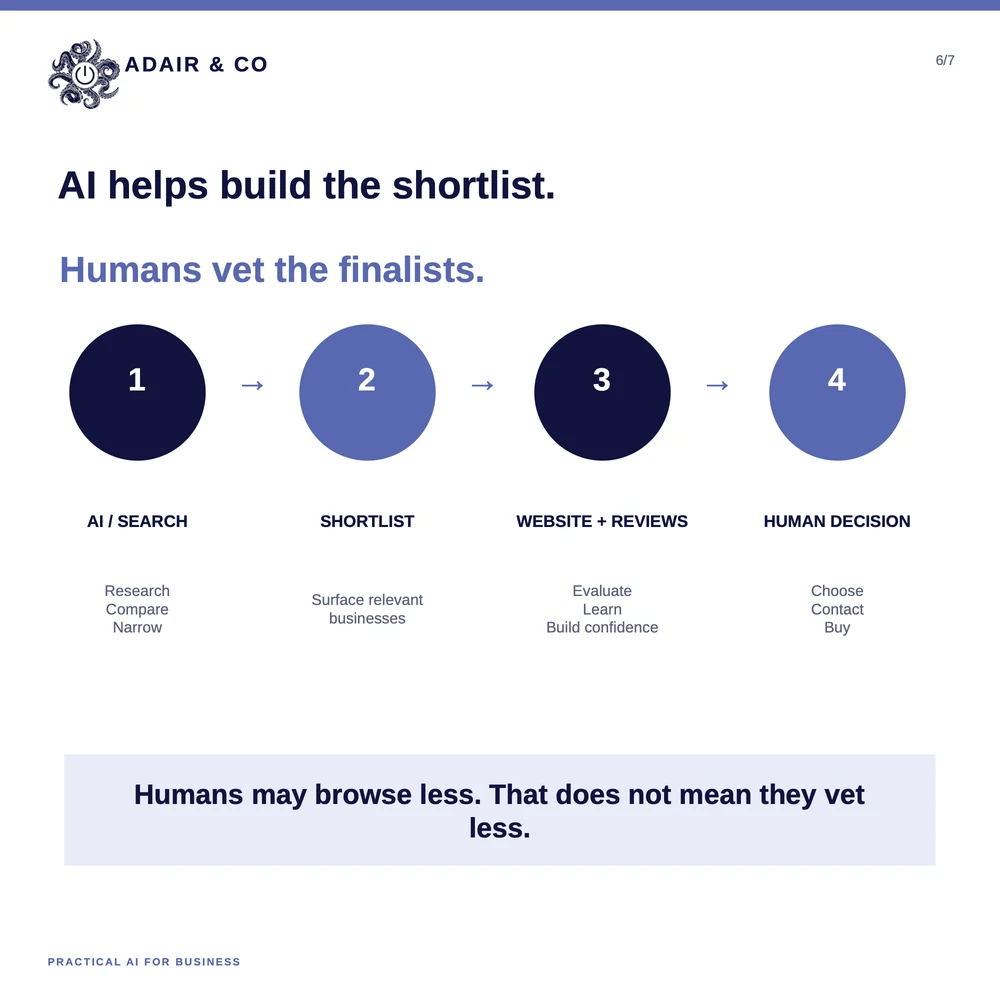
AI helps build the shortlist. Humans vet the finalists. It plays out in four steps: AI and search research, compare and narrow the field; the shortlist surfaces relevant businesses; the website and reviews are where people evaluate, learn and build confidence; and the human decision is where they choose, contact and buy.
Humans may browse less. That does not mean they vet less — a dynamic I got into in more depth in AI Changed Customer Discovery, where AI narrows the list but people still do the due diligence once they get there.
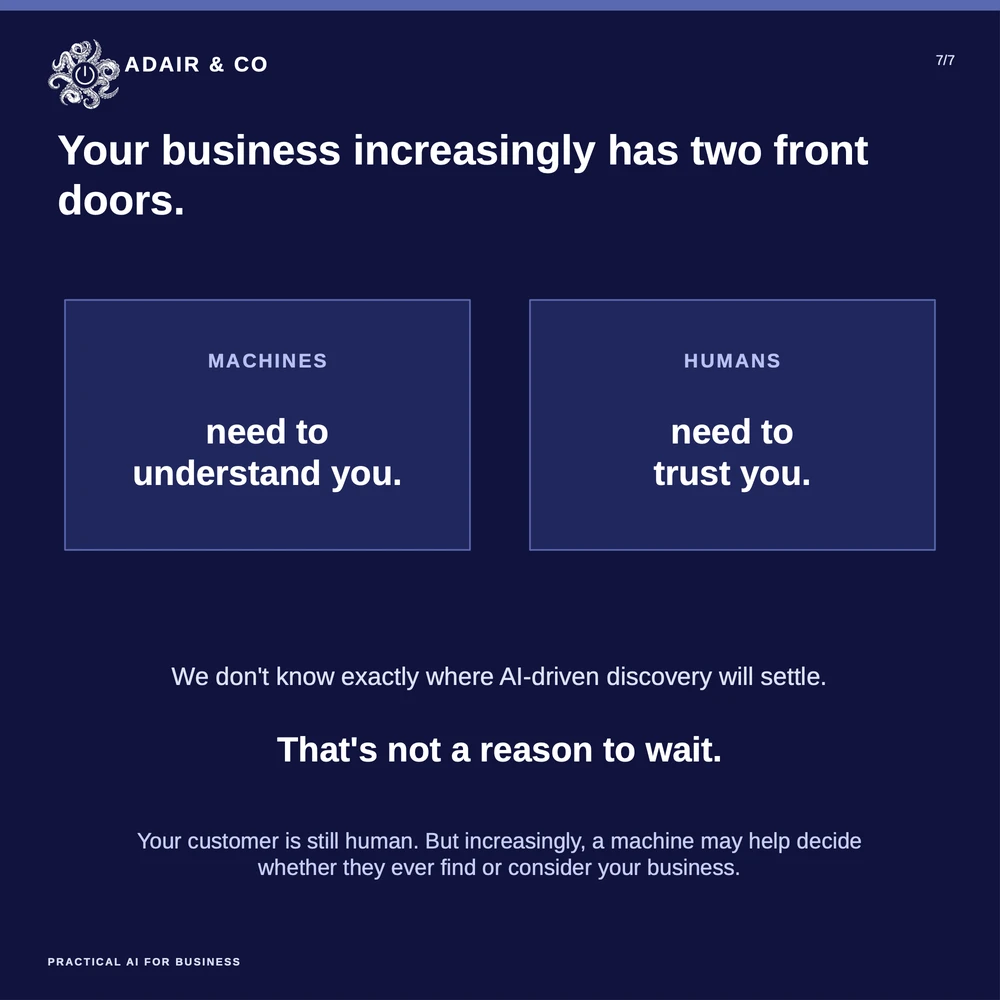
Machines need to understand you. Humans need to trust you. We don't know exactly where AI-driven discovery will ultimately settle between traditional search, AI search and AI agents. We don't need to. The direction is clear enough to act on, and I wouldn't wait on this.
That's the same instinct behind my Local AI Visibility work: giving AI systems clear, consistent, credible evidence about who you are and what you do, while your website, reviews and reputation still carry the human side of the decision.
Your customer is still human. But increasingly, a machine will help decide whether that human ever finds or considers your business.
No. Bot traffic includes search crawlers, automation, monitoring systems, malicious bots and more — it always has. The point isn't that all of that traffic is AI. It's that more of the web overall is being consumed by machines, and AI is what makes that trend commercially important, because machines are increasingly helping humans research and choose.
Not necessarily less — possibly more. AI doesn't have to replace your website to change the customer journey. It only has to become part of deciding which businesses make the shortlist. For a high-value or high-stakes purchase, that makes the website and the shortlist more important, not less.
Don't wait for the balance between traditional search, AI search and AI agents to settle — it may not settle for a while, and the direction is already clear enough to act on. Start treating your business as having two front doors: one where machines need to understand you, and one where humans need to trust you.
Your customer is still human. But increasingly, a machine will help decide whether that human ever finds or considers your business.
Adapted from my Practical AI for Business newsletter on Substack.
That's where Local AI Visibility starts — understanding how your customers actually look for businesses like yours, and giving AI systems clear, credible evidence about yours.